
By Nancy O’Brien
These are the opinions of an individual member. For our official views on issues, refer to our state platform and national platform.

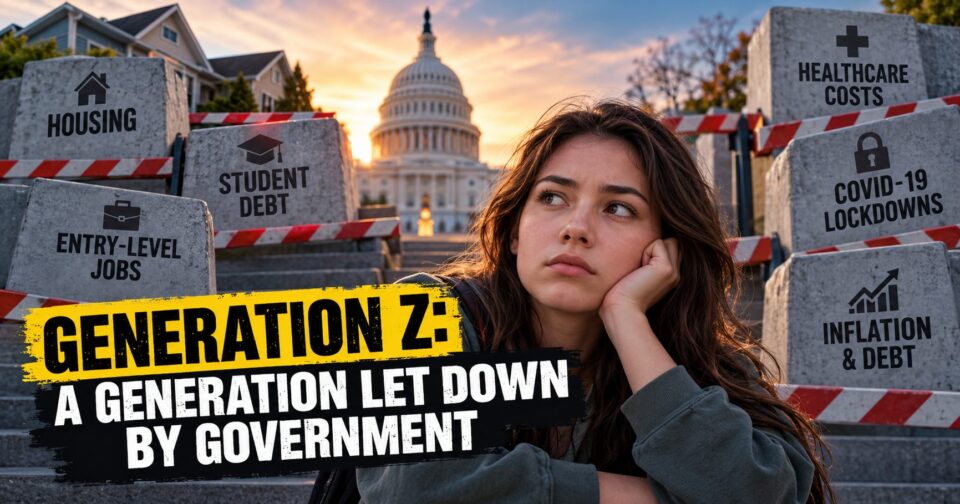
Generation Z has been more mistreated by their government than any other generation in my lifetime.
There are normal steps that most earlier generations used to start building an independent adult life: Getting a first job, finding an affordable place to live, gaining skills or education without crushing debt, and eventually starting a small business or advancing. Government policy has made many of those first steps much higher or removed them entirely.
Housing
Government policy has increased the price of new houses by roughly a quarter of the total. Zoning laws, building restrictions, environmental rules, and lengthy permitting processes have limited the supply of housing for decades. At the same time, easy-money policies inflated home prices. Result: many young people cannot afford to rent or buy, so a large share still live with their parents well into their mid-20s or later.
Education and Student Debt.
Government-backed student loans made it easy for colleges to raise tuition far faster than wages or inflation. Young people were told a degree was required for success. Many now leave school with large debts that are hard to repay on the actual salaries those degrees produce. The traditional low-cost path of working your way through school or starting with a modest credential became much harder.
Entry-Level Jobs
High minimum wages, occupational licensing requirements, and other labor regulations raise the cost of hiring inexperienced workers. Employers become more reluctant to take a chance on someone with little or no track record. The first rungs — simple starter jobs that teach basic skills and work habits — become harder to reach.
Starting a Business
Licenses, permits, taxes, zoning rules, and compliance costs make it more expensive and complicated to launch even a small business. Earlier generations could often start something modest with limited capital. Those low-barrier opportunities have been reduced.
Healthcare Costs
Layers of regulation, mandates, and third-party payment systems have driven up the price of insurance and care. Young, relatively healthy people often face high premiums or limited options, adding another fixed cost before they are financially established.
COVID-19 Lockdowns
The lockdowns hit Generation Z in the years when people usually leave home, take a first job, finish school, and learn to function among strangers. Governments closed schools, campuses, shops, and workplaces. Skills, work habits, and face-to-face life were postponed by decree. A significant portion of young people developed mental health issues because of it. Older adults already had households and résumés. The young were told to wait, then returned to higher prices and the same blocked first rungs as before.
Inflation and Debt
Persistent government spending and monetary expansion raise the prices of assets (homes, education, stocks) faster than the wages of people who are just starting out. At the same time, the national debt represents future taxes or inflation that younger generations will largely have to carry.
Taken together, these policies have raised the cost and difficulty of the earliest, most important steps toward independence. The bottom rungs that previous generations used to climb are now higher, fewer, or missing. That is why so many in Generation Z feel the system is stacked against them. Thanks to government, it is.
Writing submitted by LPMI member
Nancy O’Brien
